Emperor Go-Toba Contents Traditional history | Events of Go-Toba's life | Eras of Go-Toba's reign | Related pages | References | Other websites | Navigation menu後鳥羽天皇 (82)Annales des empereurs du Japon, pp. 207-221Gukanshō, pp. 334-339p. 207p. 334p. 207pp. 207;p. 334Ceremony of Accession (Sokui-no-Rei)pp. 219p. 221p. 230"Jōkyū no Hen"p. 236p. 343.p. 238p. 344p. 244Political Thought in Japanese Historical Writing: From Kojiki (712) to Tokushi Yoron (1712), p.104.207-221p. 334-339.e
Emperors of Japan1180 births1239 deaths
emperorJapantraditional order of successionreignEmperor Tobapersonal nameEmperor TakakuraOki IslandsImperial Household AgencymausoleumveneratedmemorialShintoshrine Emperor Go-TobaJimmuSuizeiAnneiItokuKōshōKōanKōreiKōgenKaikaSujinSuininKeikōSeimuChūaiJingūGenshōShōmuKōkenJunninShōtokuKōninTsuchimikadoJuntokuChūkyōGo-HorikawaShijōGo-SagaGo-FukakusaKameyamaGo-UdaFushimiGo-FushimiGo-NijōHanazonoGo-DaigoKōgonKōmyōSukōGo-KōgonGo-En'yūGo-KomatsuGo-MurakamiChōkeiGo-KameyamaGo-KomatsuShōkōGo-HanazonoGo-TsuchimikadoGo-KashiwabaraGo-NaraŌgimachiGo-YōzeiGo-MizunooMeishōGo-KōmyōGo-SaiReigenHigashiyamaNakamikadoSakuramachiMomozonoGo-SakuramachiGo-MomozonoKōkakuNinkōKōmeiMeijiTaishōShōwaAkihitoNaruhito
Emperor Go-Toba
Jump to navigation
Jump to search
| Go-Toba | |
|---|---|
| Emperor of Japan | |
 | |
| Reign | 1183-1198 |
| Born | 6 August 1180 |
| Birthplace | Heian Kyō |
| Died | 28 March 1239 |
| Place of death | Oki Island |
| Buried | Ōhara no Misasagi (大原陵) (Kyoto) |
| Predecessor | Antoku |
| Successor | Tsuchimikado |
| Father | Takakura |
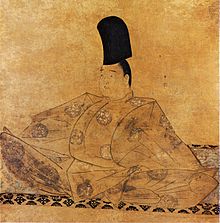
Emperor Go-Toba (後鳥羽天皇, Go-Toba-tennō, 6 August 1180-28 March 1239) was the 82nd emperor of Japan, according to the traditional order of succession.[1] His reign started in 1183 and ended in 1198.[2]
This 12th century sovereign was named after Emperor Toba and go- (後) means "later". He is sometimes called the later Emperor Toba. In some older sources, this emperor may be identified as "Toba the Second" or as "Toba II".
Contents
1 Traditional history
2 Events of Go-Toba's life
2.1 After his death
3 Eras of Go-Toba's reign
4 Related pages
5 References
6 Other websites
Traditional history |
Before he became the monarch, his personal name (imina) was Takahira-shinnō (尊成親王),[3] or Takanari-shinnō[4]
He was the fourth son of Emperor Takakura.[5]
Events of Go-Toba's life |
Go-Toba was placed on the throne at the age of three.
8 September 1183 (Juei 2, 20th day of the 8th month): In the 3rd year of Antoku-tennō 's reign, the emperor and his court fled the capital. In the emperor's absence, former-Emperor Go-Shirakawa made Antoku's younger brother emperor by decree. A ceremony which marked the young prince's acceptance of the abdication (juzen).[6]
1184' (Juei 3): Emperor Go-Toba is said to have accepted the monarch's role and duties and powers (sokui).[7] This was confirmed in ceremonies.[8]
1192 (Kenkyū 3): Go-Shirakawa died.[9] Go-Toba was the grandson of Emperor Go-Shirakawa.
1198 (Kenkyū 9): In the 15th year of Go-Toba's reign, he abdicated. His successor was his eldest son who became known as Emperor Tsuchimikado.[10]
1210 (Jōgen 4): Go-Toba's 3rd son was named emperor; and he became known as Emperor Juntoku.[11]
1221 (Jōkyū 3): Go-Toba and his supporters tried and failed to take power from the Kamakura shogunate. This was known as the Jōkyū War (Jōkyū no hen)[12] Go-Toba was exiled to the Oki Islands where he stayed until his death.[13]
13 May 1221 (Jōkyū 3, 20th day of the 4th month): Go-Toba's 4-year-old grandson was made emperor; and he became known as Emperor Chūkyō.[14]
14 January 1222 (Jōkyū 3, 1st day of the 12th month): Go-Toba's nephew was made emperor; and he became known as Emperor Go-Horikawa.[15]
1239 (En'ō 1, 2nd month): Go-Toba died at age 60.[16]
After his death |
Go-Toba was buried on Dōgo Island in the Oki Islands group. Later a part of his body was re-buried in Kyoto.[17]
According to the Imperial Household Agency, the mausoleum (misasagi) of Go-Toba is in Kyoto. The emperor is traditionally venerated at a memorial Shinto shrine at Ōhara no Misasagi.[1]
Eras of Go-Toba's reign |
The years of Go-Toba's reign are marked by more than one era name:.[18]
Juei (1182–1184)
Genryaku (1184–1185)
Bunji (1185–1190)
Kenkyū (1190–1199)
Related pages |
- Emperor of Japan
- List of Emperors of Japan
- Japanese Imperial family tree
- Insei
References |

The chrysanthemum symbol of the Japanese emperor and his family.
↑ 1.01.1 Imperial Household Agency (Kunaichō), 後鳥羽天皇 (82); retrieved 2011-12-20.
↑ Titsingh, Isaac. (1834). Annales des empereurs du Japon, pp. 207-221; Brown, Delmer et al. (1979). Gukanshō, pp. 334-339; Varley, H. Paul. (1980). Jinnō Shōtōki. pp. 215-220.
↑ Varley, p. 215.
↑ Titsingh, p. 207; Brown, p. 334.
↑ Titsingh, p. 207.
↑ Varley, p. 216.
↑ Titsingh, pp. 207; Brown, p. 334.
↑ Varley, p. 44; a distinct act of senso is unrecognized prior to Emperor Tenji; and all sovereigns except Jitō, Yōzei, Go-Toba, and Fushimi have senso and sokui in the same year until the reign of Emperor Go-Murakami. Compare Imperial Household Agency (Kunaichō), Ceremony of Accession (Sokui-no-Rei); retrieved 2011-12-23.
↑ Titsingh, pp. 219.
↑ Titsingh, p. 221.
↑ Titsingh, p. 230.
↑ Nussbaum, Louis-Frédéric. (2002). "Jōkyū no Hen" in Japan encyclopedia, p. 431.
↑ Mason, R.H.P. Mason and J.G. Caiger. (1972). A History of Japan, p. 105.
↑ Titsingh, p. 236; Brown, p. 343.
↑ Titsingh, p. 238; Brown, p. 344.
↑ Titsingh, p. 244.
↑ Brownlee, John S. (1991). Political Thought in Japanese Historical Writing: From Kojiki (712) to Tokushi Yoron (1712), p.104.
↑ Titsingh, 207-221; Brown, p. 334-339.
Other websites |
Media related to Emperor Go-Toba at Wikimedia Commons
| Preceded by Emperor Antoku | Emperor of Japan: Go-Toba 1183-1198 | Succeeded by Emperor Tsuchimikado |
Persondata | |
|---|---|
| Name | Go-Toba |
| Alternative names | 後鳥羽天皇 (Japanese); Takahira (birth name) |
| Short description | Japanese emperor |
| Date of birth | 6 August 1180 |
| Place of birth | Kyōto, Japan |
| Date of death | 28 March 1239 |
| Place of death | Oki Island, Japan |
Categories:
- Emperors of Japan
- 1180 births
- 1239 deaths


(RLQ=window.RLQ||[]).push(function()mw.config.set("wgPageParseReport":"limitreport":"cputime":"0.320","walltime":"0.415","ppvisitednodes":"value":1649,"limit":1000000,"ppgeneratednodes":"value":0,"limit":1500000,"postexpandincludesize":"value":45518,"limit":2097152,"templateargumentsize":"value":1685,"limit":2097152,"expansiondepth":"value":12,"limit":40,"expensivefunctioncount":"value":0,"limit":500,"unstrip-depth":"value":0,"limit":20,"unstrip-size":"value":8192,"limit":5000000,"entityaccesscount":"value":1,"limit":400,"timingprofile":["100.00% 280.386 1 -total"," 28.07% 78.691 1 Template:Infobox_monarch"," 16.77% 47.013 1 Template:Infobox"," 16.59% 46.511 3 Template:Nihongo"," 14.61% 40.958 1 Template:Succession_box"," 13.61% 38.152 1 Template:Monarchs_of_Japan"," 11.87% 33.285 1 Template:Navbox"," 11.79% 33.057 3 Template:Category_handler"," 9.28% 26.024 1 Template:Reflist"," 8.75% 24.542 1 Template:Wikidata_image"],"scribunto":"limitreport-timeusage":"value":"0.046","limit":"10.000","limitreport-memusage":"value":1417335,"limit":52428800,"cachereport":"origin":"mw1248","timestamp":"20190517103335","ttl":2592000,"transientcontent":false););"@context":"https://schema.org","@type":"Article","name":"Emperor Go-Toba","url":"https://simple.wikipedia.org/wiki/Emperor_Go-Toba","sameAs":"http://www.wikidata.org/entity/Q316658","mainEntity":"http://www.wikidata.org/entity/Q316658","author":"@type":"Organization","name":"Contributors to Wikimedia projects","publisher":"@type":"Organization","name":"Wikimedia Foundation, Inc.","logo":"@type":"ImageObject","url":"https://www.wikimedia.org/static/images/wmf-hor-googpub.png","datePublished":"2011-12-20T17:46:08Z","dateModified":"2018-08-12T20:43:58Z","image":"https://upload.wikimedia.org/wikipedia/commons/c/cd/Emperor_Go-Toba.jpg","headline":"Emperor of Japan"(RLQ=window.RLQ||[]).push(function()mw.config.set("wgBackendResponseTime":101,"wgHostname":"mw1258"););


